

Introduction
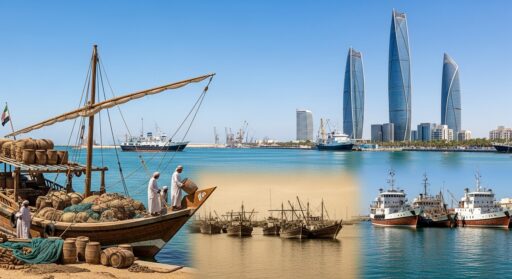
The modern UAE’s status as a global trading nexus is not an accident of the oil era but the reactivation of a deeply rooted historical identity. For centuries, its coast was dotted with vibrant port cities that served as crucial links in the Indian Ocean’s commercial network. Three of the most significant were Julfar, Dibba, and Khor Fakkan. These were not just points of import and export; they were cosmopolitan hubs of exchange, where goods, ideas, and cultures from across the ancient world met and mingled, laying the early foundations for the UAE’s outward-looking and mercantile character.
History
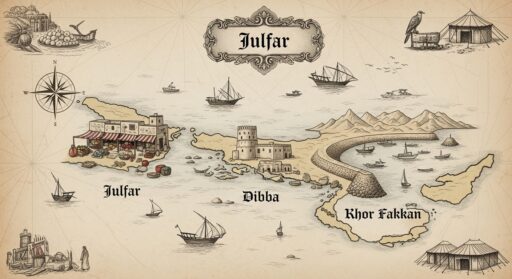
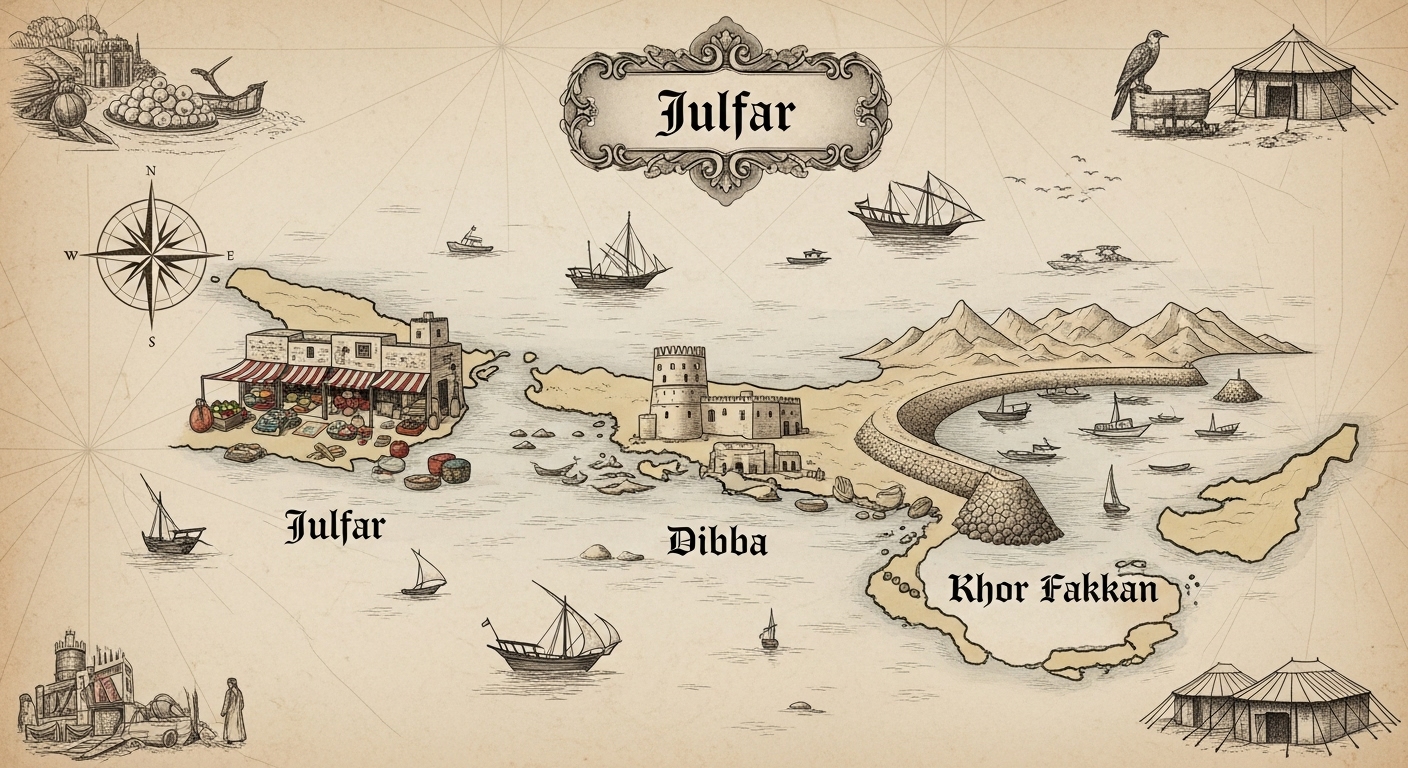
- Julfar: Located in the area of modern-day Ras Al Khaimah, Julfar was one of the most important ports in the Lower Gulf from the 14th to the 17th centuries. It was the home port of the legendary Arab navigator Ahmed ibn Majid and a key base for the powerful Qawasim tribe. Julfar thrived on the trade of pearls, dates, and horses, and was famous for its prolific pottery industry, whose products have been found as far away as East Africa and China.
- Dibba: Straddling the coast of the Oman Peninsula, Dibba has been a site of human settlement and trade for millennia. In the pre-Islamic era, it was a major market town. Its historical significance is marked by the “Battle of Dibba” in 632 CE, a pivotal event in the Wars of Apostasy that followed the death of the Prophet Muhammad. Throughout history, it remained an important port for the trade of dates and dried fish.
- Khor Fakkan: This natural deep-water harbor on the UAE’s East Coast (an enclave of Sharjah) is a classic “port of call.” Its strategic location offered shelter from the seasonal Al Kaus winds, making it a vital stopover for dhows traveling between the Gulf, India, and Africa. It was fought over by the Portuguese, Ottomans, and local powers, a testament to its strategic value.
Key Features
These historic ports shared several key characteristics:
- Strategic Geography: Each was located in a naturally sheltered bay or had access to rich hinterlands. Julfar was near date palm oases, Dibba had access to the fertile Al Batinah coast, and Khor Fakkan offered a rare safe haven on the exposed Indian Ocean coast.
- Multi-Functional Economy: They were not merely transit points. They were centers of production (Julfar’s pottery, Dibba’s dates) and had robust local economies supporting the sailors, merchants, and craftsmen who lived there.
- Cultural Crossroads: Archaeological finds in Julfar include Chinese celadon, Persian coins, and Indian beads. These ports were melting pots where Arab, Persian, Indian, and African cultures interacted, influencing local language, cuisine, and traditions.
- Cycles of Rise and Decline: Their fortunes waxed and waned with the shifting patterns of trade, the rise and fall of empires, and regional conflicts. The silting of Julfar’s harbor and the rise of other powers led to its eventual decline.
Cultural Significance
These ancient ports are the physical evidence of the UAE’s long history of global connectivity. They demonstrate that the region was never an isolated backwater, but an active and influential participant in the Indian Ocean world. The mercantile spirit, the openness to foreign cultures, and the savvy understanding of global markets that defined these ports are the direct ancestors of the economic policies that drive Dubai and Abu Dhabi today. They are a source of deep historical pride, proving that the UAE’s modern role as a global hub is a return to its historical norm after a period of relative decline.
Modern Relevance
The legacy of these historic ports is vividly alive. The modern port of Fujairah, one of the world’s largest bunkering hubs, is the direct successor to Khor Fakkan, leveraging the same strategic Indian Ocean access. Ras Al Khaimah is actively excavating and promoting the site of Julfar as a key heritage tourism attraction. The spirit of these trading hubs is embodied in the UAE’s modern free zones and mega-ports, which, like their ancient predecessors, are designed to facilitate the smooth flow of goods and capital from across the globe. They serve as a powerful reminder that geography is destiny, and the UAE’s location remains its most enduring asset.
Conclusion
Julfar, Dibba, and Khor Fakkan are more than archaeological sites; they are the ancestral homes of the UAE’s commercial DNA. In their bustling souqs and crowded harbors, one can see the blueprint for the nation’s economic success. The story of these ports connects the pearling dhows of the past to the container ships of the present, revealing a continuous thread of trade, entrepreneurship, and connection to the wider world. By understanding these historic hubs, we understand that the UAE’s 21st-century skyline is not a sudden apparition, but the latest manifestation of a trading civilization that has flourished on these shores for a thousand years.